
Getting Married in Mauritius During Winter (June–September): The Smart Couple's Secret
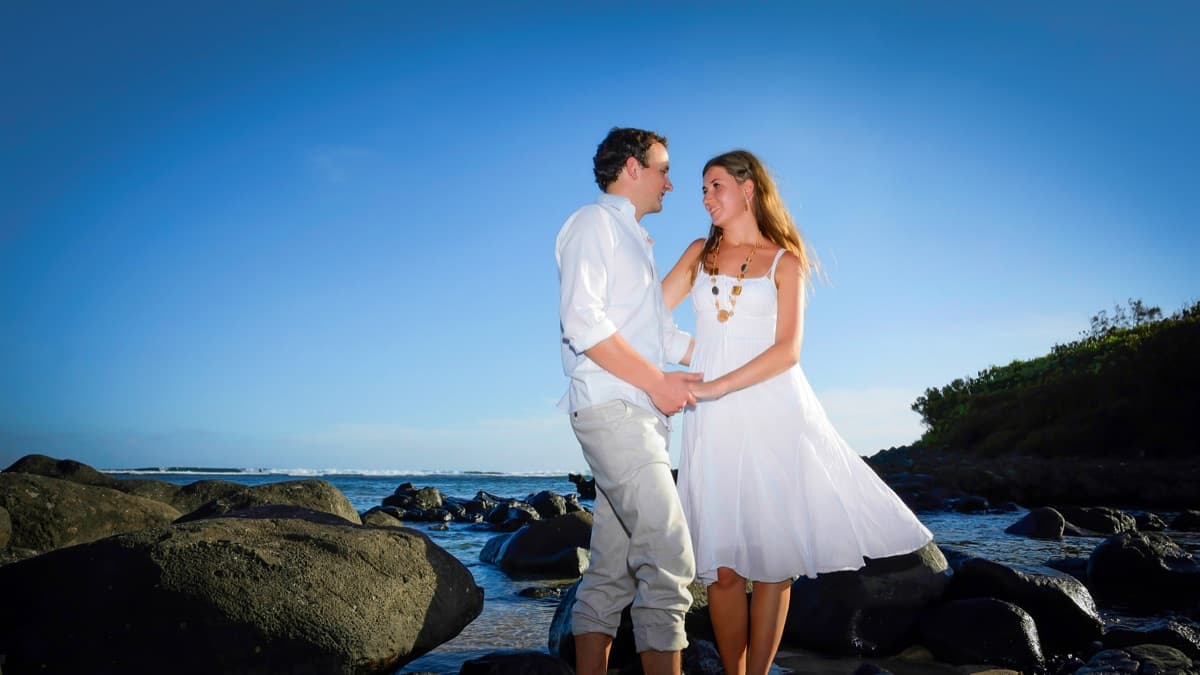
Getting Married in Mauritius During Winter (June–September): The Smart Couple's Secret
When Everyone Else Looks Elsewhere, the Most Beautiful Weddings Happen in Silence
There Is a Silent Conspiracy in the World of Destination Weddings
A sort of unspoken agreement among magazines, blogs, and wedding planners around the world to steer you toward the same window of time: October, November, December. The "high season." The moment everyone wants to marry in Mauritius. The moment prices climb, availability shrinks, and the beaches are shared with dozens of other couples who have come to live exactly the same dream, at exactly the same time.
Meanwhile, from June to September, Mauritius waits. Calm. Luminous. Almost secret.
We have been photographing weddings on this island for over sixteen years. And if we had to choose — if someone put us in front of a calendar and asked "when?" — we would point to the southern winter without the slightest hesitation.
Here's why.
The Truth About the "Low Season" (Which Isn't One)
The word "winter" is off-putting. It's understandable. When you're French, when winter conjures frost on windshields, scratchy scarves, and days that end at four in the afternoon, the idea of getting married during winter — even the southern kind — seems counterintuitive.
So let's put the numbers on the table.
From June to September, daytime temperatures in Mauritius hover between 23 and 25°C on the coasts. It's cooler than the southern summer, yes — but it's the temperature of a beautiful June day in Paris. Except in Mauritius, this "cool" comes with about seven to eight hours of sunshine daily, a sea temperature of 25°C, and skies that shift between deep blue and dramatic clouds that make photographers' hearts sing.
Rain? It's the driest period of the year. June, July, August, and September are among the least rainy months, with rainfall significantly lower than in summer (January–March), which is also cyclone season.
No cyclones in the southern winter. Zero. The official cyclone season runs from November to May.
Getting married between June and September means giving yourself absolute meteorological peace of mind.
The Financial Advantage: 30 to 40% Real Savings
This may be the argument that tips the scales for the most pragmatic couples — and there is no shame in being pragmatic when you're planning a wedding.
The southern winter is considered the low tourist season in Mauritius. What this concretely means is that hotel rates drop significantly. The five-star resorts that charge top dollar for their suites in December offer notable discounts during this period. Wedding packages, group rates for your guests, flights from Paris — everything follows the same trend.
This saving is not marginal. Depending on the properties and exact dates, the difference can amount to several thousand euros on the overall budget. Several thousand euros you can reinvest in a better photographer, a more ambitious caterer, activities for your guests, or simply in your honeymoon.
The money saved is not money lost in quality. It's money recovered from the laws of supply and demand. The vendors are the same. The sand is the same. The ocean is the same. Only the calendar changes — and with it, the price.
The Winter Light: The Photographer's Treasure
We're going to let you in on a professional secret.
The light in Mauritius during the southern winter is, from our photographer's perspective, the most beautiful of the year.
In summer, the sun is harsh. Vertical. It flattens the landscapes, carves deep shadows, and forces couples to squint. Photo sessions are concentrated into a narrow window around sunset — the golden hour — and the rest of the day is a constant battle against overexposure.
In winter, everything changes. The sun sits lower on the horizon, even at midday. Its shorter arc creates a lateral, soft, enveloping light that lasts for hours instead of a few minutes. The skies are more varied — deep blues, sculpted clouds, colour gradients at sunset that stretch into eternity instead of vanishing in a flash.
Skin is better lit. The details of the dresses emerge. The textures of the sand, the volcanic rock, the foam of the waves — everything gains depth. Every image has a richness that summer light, as spectacular as it is, cannot deliver with the same consistency.
And then there are the sunsets. Winter sunsets in Mauritius are among the most dramatic we have ever photographed. The sun sinks slowly, the sky ignites in palettes of rose, orange, and violet, and this descent lasts, lasts, lasts — as if the horizon itself didn't want to let this light go.
If your photos matter — and after sixteen years, we can tell you they will matter more than you imagine — the southern winter is a gift.
Fewer Tourists, More Intimacy
There is a difference between getting married in a beautiful place and getting married in a beautiful place that is also peaceful.
In high season, Mauritius's popular beaches see a constant flow of tourists. Hotels are full. Restaurants require reservations. Popular spots — Chamarel, Île aux Cerfs, the Pamplemousses garden — are bustling.
In the southern winter, Mauritius finds a slower rhythm. Beaches are less crowded. Ceremony venues are more readily available — and often on more favourable terms. Your wedding has room to breathe. Your guests have the island to themselves, or close to it.
This tranquility changes everything. It changes the quality of the photos — no parasols in the background, no tourists crossing the frame. It changes the atmosphere of the ceremony — the natural silence of the island wraps around your words instead of drowning them in ambient noise. It changes your guests' experience — who discover Mauritius in its most authentic version, without the filter of mass tourism.
The Wind: The Elephant in the Room
Let's be honest. The southern winter in Mauritius has one flaw, and it blows.
The south-east trade winds are more pronounced from June to August, mainly affecting the east coast and south coast of the island. This wind can be refreshing — but it can also turn an elaborate hairstyle into abstract art and carry a veil all the way to Rodrigues.
The solution is simple: choose the north coast or the west coast.
These coasts are naturally sheltered from the trade winds by the island's central highlands. Trou aux Biches, Mont Choisy, Grand Baie in the north; Flic-en-Flac, Tamarin, Le Morne in the west — these spots benefit from a milder microclimate, sheltered from the wind, with calm waters and serene beaches even in the heart of winter.
If you've already fallen in love with a spot on the east coast — Belle Mare, Trou d'Eau Douce — all is not lost. The wind isn't constant. There are calm days, and your local wedding planner will know how to advise you on the most favourable dates. But if you have the choice, head west or north. Your hairstylist will thank you.
Cool Evenings: An Unexpected Charm
Here's a benefit of the southern winter that nobody ever mentions, and which surprises us every year with its emotional power.
In summer, reception evenings unfold in heat and humidity. It's beautiful, it's tropical, but after a few hours, jackets come off, makeup melts, and the energy of the party dissolves in the mugginess.
In winter, evenings are cool — around 18 to 20°C. Just enough to want to draw closer. Just enough for your guests to throw on an elegant shawl or a linen jacket. Just enough for the candles on the tables to be more than decoration — a genuine source of warmth and light.
There is something deeply romantic about an outdoor reception where the cool of the night invites bodies to move closer. Dances are tighter. Conversations are more intimate. Hands find each other under the tables. And when the last guests leave the party, it's not because they're hot — it's because the Mauritian night wraps around them so gently that they no longer want to resist sleep.
The Cultural Calendar: An Unexpected Bonus
Getting married during the southern winter also means getting married during one of the richest periods of the Mauritian cultural calendar.
The festival of Ganesh Chaturthi, which honours the Hindu elephant-headed god, usually falls in August or September. Colourful statues of Ganesh appear across the island before being immersed in the sea or rivers during joyful, spectacular processions.
For your guests — especially those who have never left Europe — witnessing these celebrations adds an extraordinary cultural dimension to the trip. Mauritius is not just a postcard backdrop. It's a living, multicultural, vibrant island that offers experiences neither Tuscany nor Provence could ever provide.
The Verdict of Sixteen Years of Weddings
We have photographed weddings in Mauritius every month of the year, in every light, under every sky. And if we had to sum up the southern winter in a single sentence, it would be this:
It's the season where Mauritius stops playing a role. It is itself.
Not the postcard version. Not the "all-inclusive" version from magazines. The real Mauritius. The one that breathes, takes its time, gives its light without counting and its beaches without condition.
It's the season when the smartest couples say yes. Not because it's cheaper — even though it is. Not because it's quieter — even though it is. But because the southern winter has a quality the high season cannot buy: authenticity.
And in the photos, you can see it. You can feel it. You keep it forever.
Nat & Jude photograph weddings in Mauritius all year round — but between us, the southern winter holds a special place in our hearts and in our portfolios. Get in touch to talk about it.
Related Services
Honeymoon Photo Session
Immortalize your honeymoon with a romantic photo session on the most beautiful beaches of Mauritius
Wedding Photography
Capture every precious moment of your wedding with our expertise of over 16 years
Couple Photo Session
A romantic photo session to celebrate your love in paradisiacal settings