
First Time in Mauritius? The Guest Survival Guide for Your Wedding Weekend
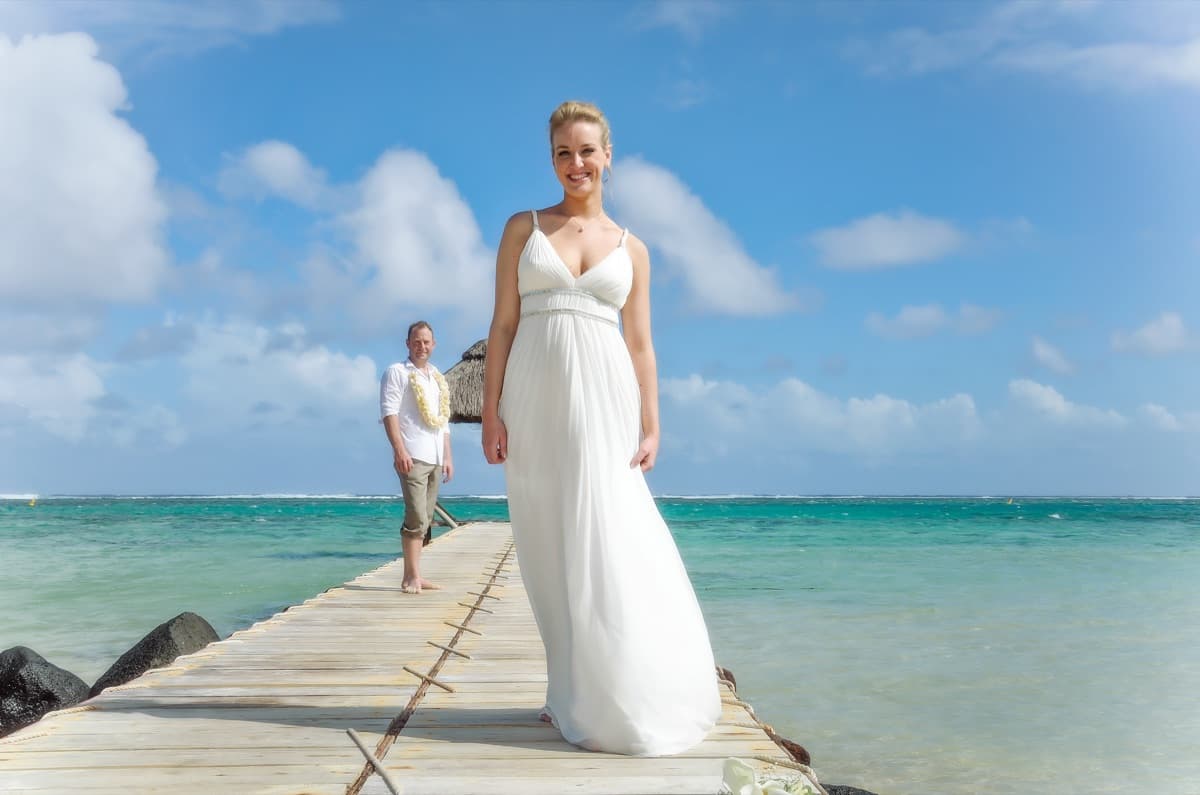
First Time in Mauritius? The Guest Survival Guide for Your Wedding Weekend
Send this to them before they leave. They will be eternally grateful.
Everything Your Guests Won't Dare Ask You
(Because You Have Enough to Organise)
Your guests are wonderful. They said yes to your wedding at the other end of the world. They booked time off, reserved flights, convinced their boss that yes, they really need ten days in November. Some saved up for months. Others arranged for someone to look after the cat.
They deserve a guide. Not a tourist guide — a practical, honest guide written by people who have lived and worked in Mauritius for over sixteen years. The kind of guide that answers the questions nobody dares ask out loud.
Before You Leave
The passport (not the ID card)
French nationals do not need a visa for a stay of under sixty days in Mauritius. But a valid passport is mandatory — the national identity card is not enough, even for EU citizens. The passport must be valid beyond your planned return date.
On arrival, an entry stamp is placed in the passport. Immigration may ask for proof of accommodation (a hotel reservation) and a return ticket.
Vaccinations
No vaccinations are required to enter Mauritius from France. None. No yellow fever certificate, no health pass. The standard vaccinations recommended in France (DTP, hepatitis A) are sufficient.
Travel insurance
Strongly recommended. Medical care in Mauritius is of good quality but not free for foreigners. Travel insurance covering medical expenses and repatriation is a safety net that every responsible traveller should have.
The Flight
Airlines and duration
Three airlines offer direct flights from Paris: Air France (around ten flights per week from CDG), Air Mauritius (seven flights per week from CDG), and Corsair (three to five flights per week from Orly).
The direct flight takes about eleven hours. It is a night flight in both directions — departure in the evening, arrival in the morning. Which means you sleep (or try to) on the plane and arrive fresh (or approximately) for your first day.
Airlines with connections — Emirates via Dubai, Turkish Airlines via Istanbul, ITA via Rome — sometimes offer competitive fares but add three to eight hours to the total journey.
Prices
Booking six months in advance, expect between 700 and 1,200 euros round-trip in economy, depending on the season and the airline. Low season (June–September) offers the best fares. High season (December–January) is the most expensive.
Tip: if the wedding group is over ten people, some airlines offer group rates. Enquire with the sales teams of Air France or Air Mauritius.
The wedding dress in the cabin
If you are transporting a wedding dress, a suit, or any delicate garment: carry it in the cabin, in a rigid garment bag. Contact the airline in advance to declare the special item. Most airlines accommodate garment bags in the overhead compartments or onboard closets.
Arriving in Mauritius
The airport
Sir Seewoosagur Ramgoolam International Airport (SSR) is located in the southeast of the island, about fifty kilometres from Port Louis (the capital) and at varying distances from the hotel zones.
Transfers to hotels take between forty-five minutes and an hour and a half depending on the destination. The north (Grand Baie, Trou aux Biches) is about an hour and fifteen minutes. The west (Flic-en-Flac, Le Morne) is about an hour. The south (Bel Ombre) is thirty-five minutes.
The time difference
Mauritius is two hours ahead of Paris in summer (French summer time) and three hours ahead in winter. This is one of the gentlest time differences for a long-haul flight — no devastating jet lag, just a slight offset that corrects itself in a day.
The currency
The local currency is the Mauritian rupee (MUR). One euro is worth about 48 to 50 rupees (variable rate). Visa and Mastercard credit cards are accepted everywhere in hotels, restaurants, and major shops. ATMs are available in all tourist areas.
It is useful to have some cash in rupees for small purchases — markets, local taxis, tips. Exchange can be done at the airport on arrival or at exchange offices in town.
Driving
Mauritius drives on the left — a British legacy. If your guests rent a car, they should know this before finding themselves on the wrong side of a roundabout. The roads are generally good but narrow, and local driving is… creative. For the less adventurous, taxis and organised transfers are a more relaxed option.
Daily Life in Mauritius
The language
Mauritius is effectively a French-speaking country. French is spoken and understood everywhere — in hotels, restaurants, shops, taxis. Mauritian Creole, the mother tongue of the majority, is very close to French and largely intelligible. English is the official language of administration but is less commonly spoken in daily life. Your French-speaking guests will have no communication problems.
A few useful Creole phrases
To shine in company and make locals smile, here is the survival vocabulary: "Ki manière?" (How are you?). "Mo bien, mersi" (I'm well, thank you). "Combien sa?" (How much is it?). "Mersi boukou" (Thank you very much). A few words, spoken with a smile, open doors and hearts.
Tipping
Tipping is not mandatory in Mauritius but is appreciated and common. In restaurants, ten per cent of the bill is the norm if service is not included. For taxi drivers, porters, and chambermaids, a few tens of rupees are appreciated. For the wedding staff — caterer, DJ, coordinator — the couple usually handles tips. Guests need not worry about this.
Safety
Mauritius is one of the safest countries in Africa and the Indian Ocean. Violent crime against tourists is extremely rare. Common-sense precautions apply as everywhere: do not leave valuables unattended on the beach, avoid isolated areas at night, lock your hotel room. But in general, your guests can walk, explore, and enjoy the island with complete peace of mind.
The power sockets
Mauritius uses Type G sockets — the same as in the United Kingdom, with three rectangular prongs. An adapter is needed for French devices. Most hotels provide them, but bringing your own is more reliable. The voltage is 230V — identical to France, so no transformer is needed.
Health and Comfort
The sun
The Mauritian sun is deceptive. The sea breeze creates a feeling of coolness that masks the intensity of UV rays. Sunburn is the number one health complaint of tourists in Mauritius. Sunscreen SPF 50 minimum, applied every two hours, even in cloudy weather. A hat and sunglasses are essential.
The mosquitoes
They exist, especially at dusk and dawn. Mauritius has no malaria — the country is considered malaria-free — but the bites are unpleasant and can in rare cases transmit dengue or chikungunya. A DEET-based or icaridin repellent, applied in late afternoon, is the best protection. Hotels generally provide mosquito repellent devices in rooms.
The water
Tap water is technically drinkable in Mauritius, but the taste can be surprising. Bottled water is available everywhere and inexpensive. For sensitive stomachs, stick to bottled water for the first few days.
The food
Mauritian cuisine is diverse, flavourful, and generally safe for European stomachs. Dishes are often spicy — if you are sensitive to chilli, ask for "pas piquant" (not spicy) and you will be accommodated with a smile. Street food (dholl puri, gâteaux piment, bol renversé) is a must — clean, fresh, and delicious.
What to Pack
The savvy guest checklist:
Clothes: wedding outfit (check the couple's dress code), swimwear, shorts, light dresses, a jacket or light sweater for evenings (especially June to September), comfortable walking shoes if excursions are planned.
Protection: high SPF sunscreen, after-sun lotion, mosquito repellent, hat, sunglasses.
Practical: Type G power adapter, phone charger, camera (or charged phone), waterproof pouch for the beach.
Just in case: personal medication, small first-aid kit (plasters, paracetamol, anti-diarrhoeal), digital copy of passport emailed to yourself.
The Final Word (Read with a Smile)
If you are invited to a wedding in Mauritius and you are still hesitating about making the trip, here is what sixteen years of wedding photography have taught us about the guests who come.
They arrive tired from the flight, a little disoriented, wondering whether it was really worth the journey. Then they put a foot on the sand. Then the warmth wraps around them. Then they see the blue of the lagoon and their jaw drops slightly. Then they taste their first cocktail facing the ocean. Then they attend the ceremony and cry more than expected. Then they dance the seggae barefoot. Then they look up at the stars.
And at the moment of leaving, without exception, every single one of them says the same thing:
"It is the most beautiful wedding I have ever attended."
Come. You will not regret it.
Nat & Jude have been photographing weddings in Mauritius for sixteen years — and the awestruck faces of guests discovering the island are among our favourite images. Contact us to talk about your wedding.
Related Services
Honeymoon Photo Session
Immortalize your honeymoon with a romantic photo session on the most beautiful beaches of Mauritius
Wedding Photography
Capture every precious moment of your wedding with our expertise of over 16 years
Couple Photo Session
A romantic photo session to celebrate your love in paradisiacal settings